Recently Canon announced the introduction of three new lenses to their EF lineup.  The long awaited 24-70 f2.8 L II finally broke cover as well as two wide prime lenses with IS, the first of their kind.  Much has been made about the projected $2300 price point for the new 24-70 though which is about $1200 more than you can currently get the previous version for.  In the last couple of years Canon have updated some old lenses and introduced some new ones, all of which I have found to be exemplary so my gut feeling is that for pros, the price point will be justified.  I was never that enamored with the wide open quality of the MKI version of this lens, it’s one of the few L series lenses that I have never owned so the prospect of a higher quality version is something I have looked forward to for some time.

Canon also showed the ‘first ever’ wide angle primes with IS, a 24mm f2.8 IS and a 28mm f2.8 IS.  I have to say this came of something of a surprise to and initially I wasn’t quite sure what I’d use these for but more on that in a minute as things become a little clearer when you have it in your hand.

EF 24-70 f2.8 L II

Unusually I was able to get my hands briefly on all three of these new lenses within a few days of their announcement.  Of course the first one I looked at was the 24-70.  Physically there have been some changes to the lens and it comes in noticeably lighter.  The weight difference is 150g , roughly 16% lighter but if you’d told me it was 25% lighter I would have believed you, perhaps something to do with the distribution of the weight.  Mounted to my 5dMKII it felt like a perfectly balanced package.  Another physical difference is the 82mm thread on the front element, up from 77mm on the previous version.  I remember the change from the old 16-35 f2.8  to the 16-35 f2.8 II which went through the same increase in diameter.  The end of the MKII 16-35 appeared a fair bit larger than its predecessor, with a bulge in the lens casing.  I’m happy to say though the the 24-70 doesn’t suffer from this at all.  I was worried it would seem a lot bulkier but actually it feels quite svelte and apart from the annoyance of all your 77mm filters no longer fitting, it’s a change that will go unnoticed by most.

Continue reading »

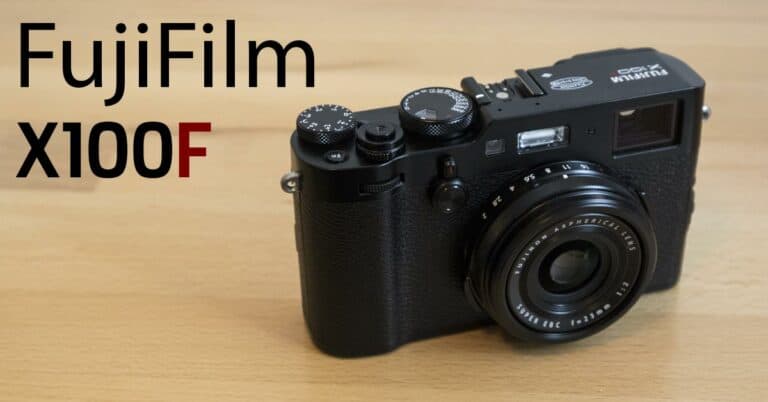
The Fuji x100 is a phenomenally successful camera, even 6 months after it hit store shelves it’s still in short supply. I reviewed it myself and fell in love with it but the price tag isn’t for everyone, neither is the fixed 24mm prime lens. In September 2011 Fujifilm announced the X10 which addresses both of these considerations so I figured I would write up a comparison to help people choose between the two. At first glance they look fairly similar as both are based around the same rear screen and controls and a similar magnesium chassis but in fact these cameras will satisfy very different people and produce quite different images.


Continue reading »

Boy has this been a long time coming!  We first learned about the Fuji x100 way back in September 2010 where it was shown in prototype form at Photokina.  The internet was instantly ablaze with hands on impressions (as much as you can get from a prototype) and forums were full of excited people in love with Fuji’s classic design.  An astute move by Fuji’s marketing department capitalized on peoples desire and the official x100 page gradually leaked a series of in-depth preview articles discussing every aspect of the camera over the next 8 months.  By the time they actually started appearing in stores we knew every little detail about this camera and consumers were practically foaming at the mouth to get their hands on them.  Even now, a month or so down the line , supply are fairly constrained and the x100 has clearly been a runaway sales success.  This doesn’t necessarily guarantee a great product though as the clever marketing strategy and beautiful classic looks could have sold many thousands before anyone even reviewed one.  Read on to find out about one of the hottest cameras from the last 10 years….

Continue reading »

Around this time of year he rumor mills really start to turn the greasy wheels.  July, August and September are often months that see the key players in the industry announce new products either for immediate delivery, or increasingly in recent years , for deliver before Christmas.  In the last few years a wealth of websites have cropped up to deal with rumors for specific camera brands.  A few of these sites have good track records in tracking down new information long before anything official is released by the manufacturers.  Some of the other sites……. well they don’t have the best of luck.  Often there are snippets of correct information but it’s muddled in amongst bogus specs and rarely are things correct many months out.  Once things get close to an official announcement the rumors start to get a closer to the real deal.

I’m sure we are going to see weekly updates on these sites with supposed specs on new gear, one thing for certain though is that Sony, Nikon and Canon can be expected to make some major announcement in this time frame.

Sony looks set to bring an A77 to the market in July featuring their pellicule mirror technology to an APS-C camera with some decent specs to sit above their A55.

Nikon will be replacing the D3 and the D700 at some point.  It seems likely that at least one of these will be in August.  Before the Pixiq tradeshow was cancelled, Nikon and Canon were probably planning on releasing things at that show.

You guys know that for me it’s the Canon gear that I’m most interested in.  The website Canon Rumors has had so many conflicting reports over the months it’s hard to make sense of it.  We will certainly see an official release of the 200-400 f4 L IS which was announced as in development some months ago.  We have also been waiting for an eternity for a 24-70 f2.8 replacement.  Its been reported that there are several patents and test versions out there, some with IS and some without.  I’d say this one will finally come alongside some sort of 1dsMKIII replacement.  There has also been some reports that the 1d and 1ds line will be merged.  Not sure about that one!  And of course it’s about time for a 5dMKIII too.  On top of that there has been rumors of a 35mm f1.4 II and the much needed 50mm f1.4 II.  My bet would be on the 35mm to come first. Continue reading »

In Feb. 2011 Canon launched the Rebel T3i.  Occasionally consumer level products offer a sneak peek at something which may filter up to pro gear in a more refined manner.  The T3i, or 600D depending on where you live has one such interesting feature.

The feature in question is called Video Digital Zoom.  Now before you all yell BLEUGH …. digital zoom sucks… bare with me.  Yes in general digital zoom does suck so this feature comes with some caveats.  Unfortunately Canon has not provided any information on exactly how they are implementing this zoom mode so there is a certain amount of educated speculation going on here.  On the video page of the T3i menu you will see a new option labeled 3-10x.  It can only be selected when you are in 1080p mode so no slow mo 60p digital zooming just yet.  Once selected, you have to press the Disp. button on the back of the camera and then hold the zoom in or zoom out button.  The minimum zoom is 3x.  In other words there is no range between 1x and 3x , it just jumps straight to 3x.  From 3x to 10x the camera will perform a smooth zoom whilst holding the buttons described.  Of course that in itself is not too helpful as you have both hands touching the camera at extreme zoom levels so it’s going to be very shaky.

Below is a video example recorded using this new function so you can judge the quality for yourself.  To me, the quality at the 3x level is looking pretty darn good and as soon as you zoom in from there is drops off to pretty darn useless very quickly.  But having a good 3x zoom function is nothing to be sniffed at.

T3i w/ 100mm Macro + 3x Zoom from emmagination on Vimeo.

Here’s what I think Canon are doing here:

The T3i sensor is 5184 x 3456 pixels for photos.  In 16:9 for video that would cover 5184 x 2916 pixels.

But the video is obviously only 1920 x 1080 pixels and we know that through a process called pixel binning that is how they record the 1080p video from a sensor that has more pixels that needed.  But what if they were to only record the video from the 1920 x 1080 pixel rectangle that was in the middle of the 5184 x 2916 sensor ?  In theory this would be good quality as it would not have be “binned” but it would create a zoom effect.  How much though ?  Time for a bit of math.

o if you took just the central area of the T3is sensor you would in fact be creating an image that has a 2.7x zoom applied to it.  Now whilst the menu option does say 3-10x , Canon literature states that the zoom is “approximately 3x”.  My guess then is that it’s actually 2.7x at the minimum.  In this case, at the low end there is really no actual digital zooming taking place, that merely comes into play as soon as you begin to zoom from 3x to 10x.  You can see a very quick drop in quality in the video as soon as you do this.  The ladybird example even has the advantage of decent lighting.  In a high ISO situation this result looks much worse as the digital noise is also magnified, not in effect but in actual size!  Whilst the range between 3 and 10x is fairly useless for applications where image quality is very important, it does look like you can get a decent result at the lowest setting and you could still optically zoom if you were using a zoom lens on camera.  Will we see this function in newer Canon cameras? Maybe. And it makes me wander about potential application on other cameras like the RED Epic too.  That camera features a sensor that shoots at 5k , presumably they could also , with a firmware update, implement some sort of lower resolution recording at a zoomed level.

Other things to know about Video Digital Zoom:

  • The image cannot be magnified for focus assist.  This is a bit of a bummer as DOF will be critically thin at large zoom levels.
  • AF mode will automatically switch to Live Mode
  • Still photo shooting is not possible.

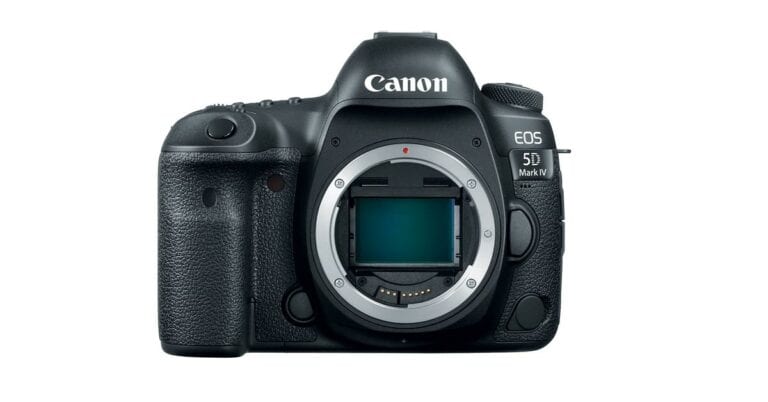
Ok lets have some fun this week!  What would you like to see from Canon in the 5d MKIII ?  I asked myself this question and this is what I came up with.

There’s no doubt that the 5D MKII was a revolutionary camera both in terms of it’s video capabilities and also it’s full frame still image quality at a much more affordable price than then 1DS MKIII.  I have no official information on 1DS sales figures but it’s pretty safe to assume they took a huge hit with the 5D MKII’s introduction, to the point where the ever squeaky rumor mill is now suggesting that the the 1DS MKIV might never come to light.  If Canon were keeping to historical time lines we would have already seen it by now. Continue reading »

Related Posts Plugin for WordPress, Blogger...
© 2010 Dan Carr Suffusion WordPress theme by Sayontan Sinha