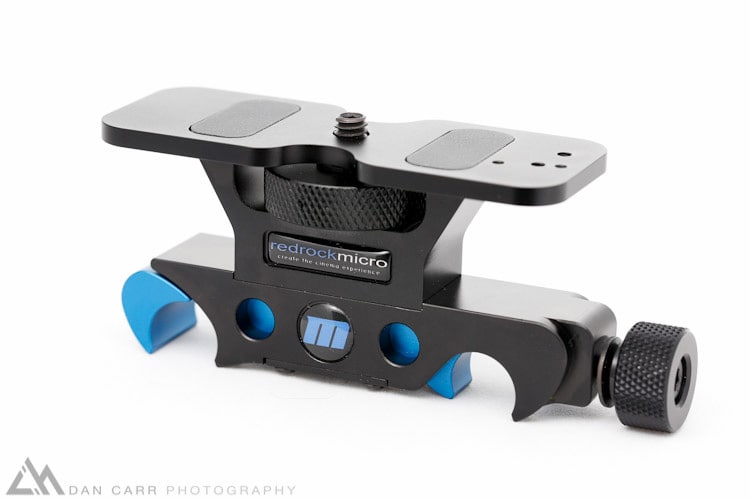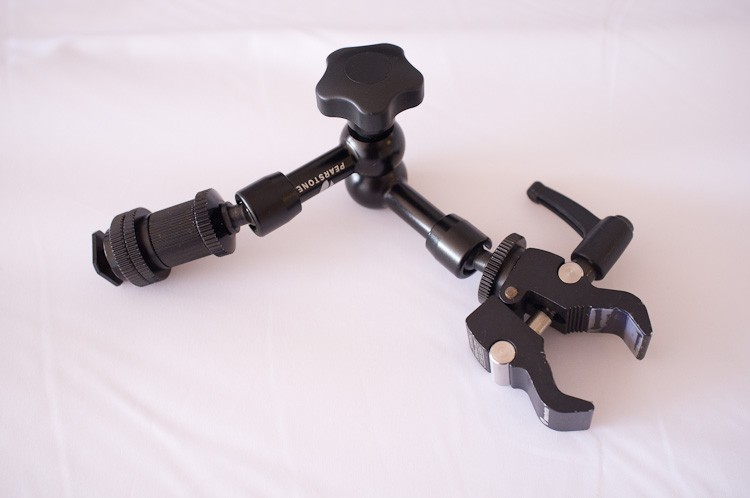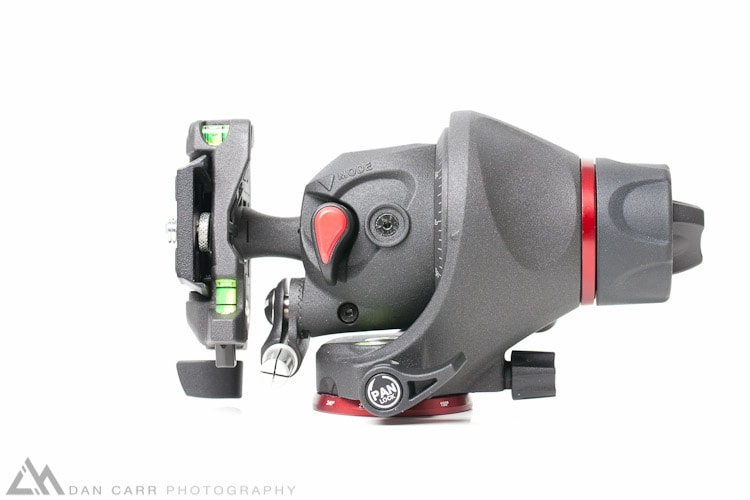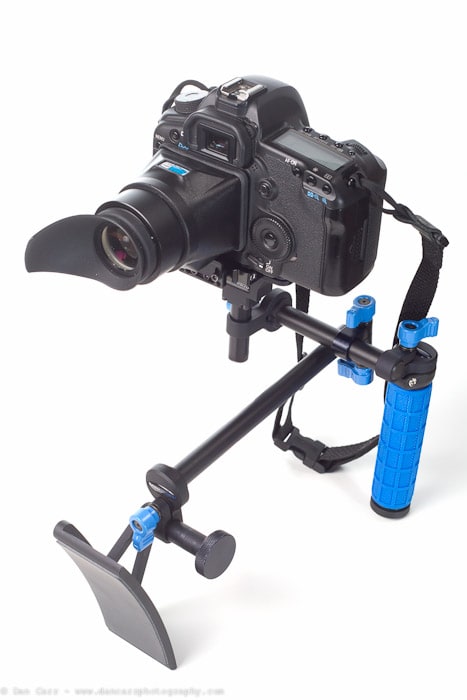
We new it was coming, Sony teased some specs and initial design drawings of it many months ago but now we have a full spec sheet, price point and final production name for the NEX FS 100.  The Sony F3 was released just a few months ago, featuring a Super 35 sized digital sensor it was met with much acclaim but a $10,000 + price tag will keep it out of reach for many people.  With this new FS 100, Sony is aiming squarely at those filmmakers considering the Panasonic AF100 or a DSLR setup.  The FS 100 also features a Super 35 sized digital sensor which makes it a little larger than the m4/3 sensor of the AF100, and a little smaller than a APS-C crop sensor of something like a Canon 60d.  Sony have gone for a modular nature with the design so you can have a small handheld rig not much bigger than  DSLR, or you can rig it up with all the trimmings and create a tripod based movie making monster. Continue reading »

A couple of days ago Canon launched a new camera, and they called it the G10….. Why would Canon decide to call this new camera the G10 ?  It’s going to play havoc with the search engines when people are trying to find information about this new camera. Perhaps there is nobody even reading this post right now because when you typed G10 into google, instead of showing you this article you were directed to a CNET review of a 2 year old point and shoot camera.  Yes you have seen the Canon G10 name before adorning the side of one of their popular Powershot G10 cameras from 2008.  At the time is was a very popular camera which has been superseded by the G11 and now G12.

I’d bet sales of Powershot G10 accessories skyrocket when the G10 video camera hits the shelves and people seek out spare batteries and carry cases only to find the ones that arrive are strangely far too small for their shiny new Video Camera!

The release of this new camera surely marks the end of the Powershot G-Series though.  The G11 and G12 were launched alongside the s90 and s95 respectively.  Those cameras had the sensor from their bigger brothers but squeezed into a MUCH smaller package.  They were a runaway winner when choosing between the two so it always seemed like the G-Series’ days were numbered.  When looking at top of the line point and shoot cameras these days you can’t help but take a look at the interchangeable lens cameras like the Panasonic GF-2 or the Sony NEX series as well.  For just a little more money you get so much more camera to play with.  Sales figures for EVIL cameras have soared in the last 12 months and with Olympus, Panasonic, Fujifilm, Leica, and  Samsung taking a shot at the compact camera/large sensor market we knew it would be only a matter of time before the big two stepped in……

As I mentioned in this post making some predictions for 2011, Nikon has filed many patents relating to such a camera and their EVIL solution is all but certain to be revealed this year.  Canon has remained a lot quieter in the area though, but it makes total sense to dispatch the old G-Series Powershots and replace them with a mirrorless camera of some sort.  For me, the introduction of a G-Series video camera seems to confirms this.

Before the 2010 Olympics kicked off in my home town of Whistler, BC, I was commissioned by the local arts council to produce a slideshow of some of my skiing images. The slideshow was played on TVs and giant screens around the Olympics during the breaks between events.  Check it out below and click through to Vimeo if you want to watch it in HD.

Whistler Core Shots Olympic slideshow from Dan Carr on Vimeo.

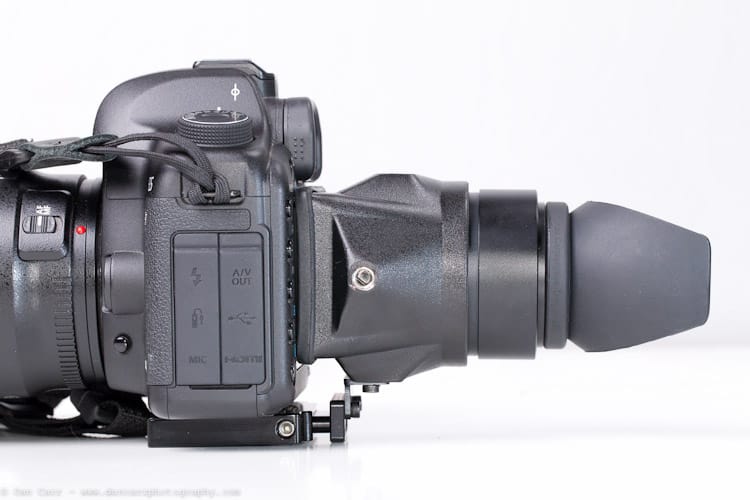
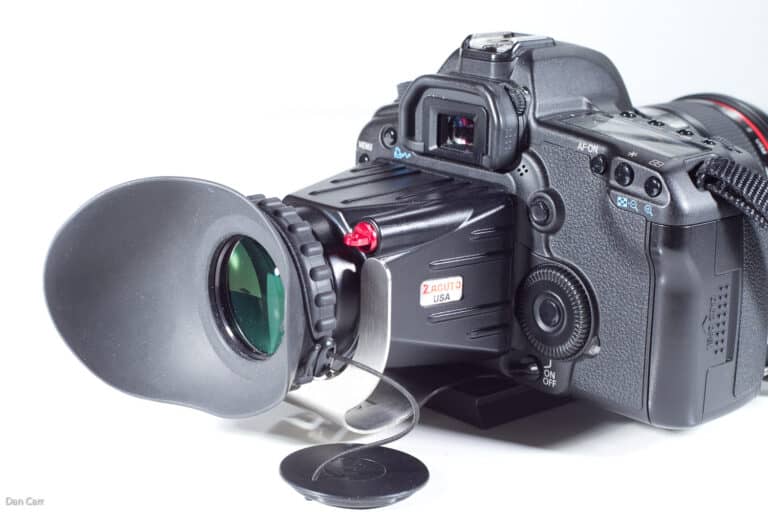
ches-jr_400pxSometimes you stumble across something  you wander how you ever did without; something that has so many uses that it instantly deserves a tiny piece of the valuable real-estate in your rapidly filling camera bag.  These two accessories from LCD manufacturer Ikan are two such items but before all you stills photographers switch off, thinking this is just for video applications, think again…. and read on. Continue reading »

1259645774Almost exactly a year ago I posted some information about the RED Scarlet Camera.  Since that time there have been a number of “announcements” from the company but most of them have said more or less the same thing. “  The cameras are delayed , but here is some more computer generated graphics of something that might possibly look like the camera when it finally arrives”.  I would imagine that Jim Janard and his crew at RED have had to re-think a few elements of their designs in an attempt to combat the surprising success of Canons DSLRs in the video field. Continue reading »

A couple of days ago we took some time off sledding here in Whistler with the PBP crew to shoot a jib setup that I had found before the season started.  The setup was a double bomb drop, one drop followed immediately by another one into some trees.  I thought i’d take a bit of time to go over my thought processes when i’m shooting something like this.  Unfortunately I can’t show you the final shot from the shoot but you’ll see it soon enough….

One of the first things you want to remember with this stuff is to try and make the setup look good.  Take the time to make things look nice for the cameras.  In this case it was being filmed too so it needed to look neat and tidy but even if i’m just shooting stills , its a good idea to keep it clean and tidy.  Put square edges on your jumps and landings and try not to put unnecessary footprints in the background.  These things wont always end up in your shot but if you do the work beforehand, once you have started shooting you won’t have to stop halfway and fix something up just because you have changed angles.

Next up, pick an angle or two.  Normally I find there is one angle that jumps out at me as “The one”.  I’ll fire off a couple of test shots shutter priority set to 1/320 (max sync speed on my canon 1DMKIIN) so I can get an idea for the angle and also what the exposure is going to be.  Then I’ll stick the camera in Manual at 1/320 and guestimate f-stop for the ambient exposure i’m going to need to underexpose by a stop or two in order to stop ghosting.  The exact amount or underexposure really depends on how much ambient is hitting the feature , in this case the rock was actually pretty well shaded so i hardly needed to underexpose the sky by much at all and the rock was almost totally dark.  We were also shooting at the end of the day so the sky had a nice deep color to it.

Now I know what my exposure setting is going to be it’s time to get out some lighting kit.  I shot this with 4x Nikon sb80DXs and one Elinchrom Ranger RX.  The SB80s were on dual brackets with each pair fired by one pocketwizard.  Note though that just because they are on the same bracket doesnt mean they have to be aimed at the same subject…  In the final scenario here, all 4 SB80s were aimed at different points by swiveling their heads around.  The next two photos show some of the differences that light placement can make.  The first setup had the ranger behind me, 2 SB80s on the left firing up at where the rider would be and then 2 more SB80s on the right firing up at the rider.  This looked pretty crap though, not enough contrast in that rock and just pretty dull looking.  The ranger was pointing far too close to the same direction as the camera was so there were very little shadows cast on the rock and the moss. FAIL.

For the second setup I moved the Ranger over to the right (you can see the flare from it in the second shot below.  That created some nice contrast in the snow on the rock now and a great reflection in the wet rock on the bottom right (compare the two!).  I then aimed one of the SB80s on the left at the rock  as there was no longer any light on that side of the rock.  The second SB80 from that bracket was zoomed to 105mm and pointed at the spot in the air where i wanted the rider to be.  The second pair of SB80s was positioned behind me.  One was zoomed to 70mm and aimed at the skier (not 105mm like the other one as this one was closer to the rider) and the second was left wide at 17mm filling in the front of the rock slightly.  The third shot below shows the view from above down to the landing and gives you some idea of the distances involved.  The Ranger is much further back as it is way more powerful.  For the fastest flash duration on a Ranger you have to have it at full power so it needs to be set back quite a long way in order to get the same exposure as the SB80s

Now we’re getting somewhere.  I got one of the riders to stand on top so I can get a feel for the shot and make some fine adjustments to the lighting.  Have them throw a snowball so you can see the trajectory and then you are good to go!  All of the flashes I was using have a fast flash duration at full power, fast enough that I can confidently leave them at full power for most things as in this case.  Then all you have to do to adjust your exposure is alter the distances that the flashes are from the subject or use the zoom function on the flash head if it has one.  Doing this quickly is just a matter of practice, I don’t use a light meter for any of it.  After a while you’ll be able to get your exposures and distances pretty dead on very quickly.

Time to drop! Video courtesy of Jeff Thomas/Poorboyz Productions.


PBP bomb drop from Dan Carr on Vimeo.

Once I have the strobes where I want them for the shoot I tend not to move them until I have the shot I want fromt that angle.  What you will normally find though is that there are some good lifestyle oppertunities as the riders go about doing there thing.  The exposure for my shot was going to be f10, 1/320 at iso 200.  That would properly expose the rock and the rider for the action shot but by following the riders round with a longer lens and simply adjusting the aperture as they got further away from the strobes, you can usually grab a couple of lifestyles if you are quick.  These 2 shots of Dane Tudor and Charley Ager were shot entirely by using the lighting setup fot the action shot.  Nothing was planned, I simply reacted to where they were and quickly adjusted the exposure.

UPDATE: September 20th 2009.

So when i wrote this post, I couldn’t show you any of the action shots from the shoot.  I needed to wait and find out if any of them were going to get used for commercial uses or in magazines.  As it happens, the best shot from this shoot was picked up by Salomon to use as an international advert for one of their new skis, the Suspect, and you might also see it crop up as a poster for one of their top skiers, Dane Tudor.

The lack of updates over the last few weeks might lead you to believe that I have been off adventuring round the world chasing snow storms….not quite.

It’s been a strange winter here in British Columbia.  The snow didn’t really come in November and December leaving the mountains still looking like mountain bike resorts.  A lot of my plans went down the plughole and I was left twiddling my thumbs for a few weeks.  Then on December 26th Vancouver received nearly 60cm of snow (though nearby Whistler got only a couple of inches).  With more snow than Vancouver had ever seen I quickly organized a trip down there to meet up with the Poorboyz crew and we hit some rails for a few days with Mike Henitiuk, Matt Margetts and Leigh Powis.  When a city that normally doesnt get any snow, receives nearly 2 feet, the place comes to a standstill.  Jeff Thomas met me at his house in North Vancouver by coming down his road on his snowmobile…..

As soon as that trip was done I headed back to Whistler for the Deep Winter photo challenge that I wrote about last week.  After the Deep Winter I headed back down to Vancouver for a shoot at Grouse Mountain which saw the beginning of another strage weather pattern.  As we arrived at Grouse it looked like the day was going to be foggy and overcast but a quick trip up the gondola quickly showed that the temperatures were inverted and the top of the mountain was bathed in a beautiful orange glow as the sun rose above the cloud layer.  This inverted weather pattern stayed around for the next 10 days though bringing unseasonally high temperatures to the alpine regions while the valleys hovered around 0.  Up in whistler the temperature in the alpine shot up to a high of 10 degrees and stayed there for the week.  The already thin snowpack was melting away…….

Booter shooting in whistler from Dan Carr on Vimeo.
With no real powder to ski anywhere I spent the week building backcountry jumps with the PBP crew.  We discovered that the snow on some West facing aspects was still soft enough to land on once you punched through a thin crust so we built a collections of step downs, hips and gap jumps with Anthony Boronowski, Charley Ager, Brandon Kelly, Dane Tudor and Riley Leboe as they work on the new Poorboyz movie to be called………. well I cant tell you that yet but wait until the SIA trade show in Las Vegas next week and all will be revealed.  For now though the inversion has dispersed and the slush has turned to Ice but at least that finally gave me some time to do an update!

I get asked this question every week so I have finally got round to making a tutorial video about it.


Photoshop Tutorial :: How to make a sequence from Dan Carr on Vimeo.

Related Posts Plugin for WordPress, Blogger...
© 2010 Dan Carr Suffusion WordPress theme by Sayontan Sinha