In the Fall of 2010 Canon announced the introduction of new MKIII extenders to replace the previous MKII versions.  Super Spectra coatings were introduced to help reduce ghosting and flare as well as fluorine coating to make water spots and finer prints easier to remove.  I’ve always fond the MKII extenders to be extremely useful when used in the right circumstances so I was eager to try out the MKIII versions to see if there was an improvement.

Continue reading »

The Canon EF 8-15 F4 L fisheye lens is one highly anticipated piece of glass !  First announced back in Autumn 2010 this is not a replacement of any existing lens, but an all new design with unique potential.  Canon originally started with the 15mm f2.8 fisheye which was designed before the digital days.  This lens provided a full 180 degree field of view on a full frame camera but users of 1.6 or 1.3 crop cameras were left with slightly less fishy look to their images.  On the Nikon side of things, Nikkor released a beautiful 10.5mm fisheye for their crop cameras but Canon never followed suit.  Sigma built a Canon mount 10mm fisheye and a few people got by with a Tokina 10-17 which did give you a wide view on a 1.3 crop camera but neither of these lenses were hugely high quality.  I often use fisheye lenses in my action sports photography work but the problem is I shoot with a full frame Canon 5dMKII and a 1.3 crop Canon 1dMKIV.  I’ve always made do with a 15mm f2.8 fisheye which is great on my 5d with it’s full frame sensor but always left me wanting when used on the cropped 1d.  Well with this new Canon 8-15 they have solved my problem and designed a lens that can achieve a full 180mm field of view on any of their digital cameras, a simply fantastic idea.


Full review with video and samples after the break.

Continue reading »

You might be wandering why I’m going to talk about this lens when Canon has already announced it’s replacement, due to hit store shelves in December 2011.  Whilst it’s true that the new EF 500mm f4 L IS II is 17% lighter than this version, the optical improvements will be fairly minor.  It’s tough to improve on the quality of any of Canon’s super telephotos.  The list price of the upcoming MKII 500mm is $10,000 but the current version is selling for “only” $6900.  When version 2 hits the second hand market there is sure to be an explosion of the MKI versions available and prices for a good condition one will probably be below $5000.  Fully half the price of the MKII , and still an incredible lens!  It might just bring this lens into the realms of possibility for a lot of shooters who wouldn’t have considered it before.

Continue reading »

If you aren’t familiar with this upcoming lens from Canon then check out my previous post with all the details.  We still don’t know when this lens is going to become available and Canon is currently tight lipped about how badly production schedules are being affected by the situation in Japan.  Last week though, the Canadian camera store Henry’s hosted a show in Toronto and the 8-15 f4 L was on show for all to see.  What made it a little different this time is that people were allowed to use them and shoot photos of them to their own memory card.  Friend of the site Chris Tanouye contacted me and showed me some sample images that he shot at the show.  Obviously lighting conditions on tradeshow floors are terribly low so it’s a difficult test but he posted some full resolution images up on his Flickr account.  You can view the whole set HERE yourself.  The images were shot on both a 50d and a 5dMKII at varying focal lengths.  They were all shot wide open (f4) and some of them at pretty slow shutter speeds so bear this in mind.

Now we have no real way of knowing what stage the sample lens was in.  i.e. how close to the production model it will be. Things may change and probably will so this is just a bit of fun to look at these really as we haven’t heard or seen anything new about this lens since September and I for one am getting impatient :) Continue reading »

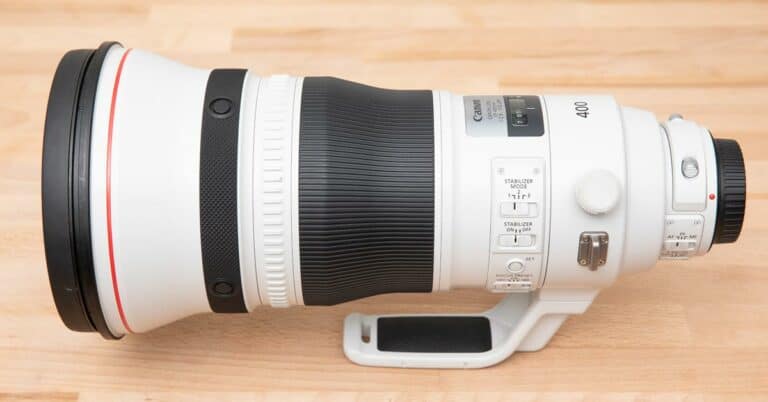
The full press release for the Canon 200-400 first announcement can be found here.  I wanted to touch on a few further thoughts about what is an incredible lens.  For years Canon shooters complained about the old school style of the Canon 100-400 f4.5-5.6 L IS.  With it’s push pull design many people found that it sucked in dust and there were also large variations in the quality of them.  Sometimes you could get a great copy, and if you didn’t mind dealing with the odd zoom design you could make some great images with it.  Many wildlife photographers used this lens for it’s compact size compared  with the large primes like the 400mm DO and the 500mm F4.  The flexibility of the zoom range meant you could get a detail shot and a scenic wider shot of the animal to show the full location a bit more.  On the other side of the fence Nikon shooters had the beautiful 200-400 F4 VR (and now a VRII version).  When the Nikon D3 came out, many wildlife shooters like Andy Biggs switched to using the D3 and 200-400 f4 combination.  The constant aperture and incredible sharpness were not without a price though (approx $7000).  Many Canon shooters longed for a similar lens, myself included.  Such a lens would be great for wildlife and also for sports.  With today’s high ISO capabilities I find less and less need for f2.8 anyway so a 400mm f4 lens would be just fine with me. Continue reading »

The Canon 70-300 f4-5.6 L IS was announced in September 2010 and made it to stores at the beginning of November.  There already exists two 70-300s in the Canon lineup but neither of them have ever been showered with praise.  The previous 70-300 f4.5-5.6 DO IS lens was incredibly small due to its difractive optics design, but image quality suffered and it never sold in large numbers.  The 70-300 f4-5.6 IS (non-L) is a more budget oriented lens (approx. $550) and again never really turned any heads.  I heard a lot of people cry “Oh my god a variable aperture L lens, what are Canon thinking?!” when this one was announced.  But they seem to have forgotten that one of Canon’s most popular zooms has always been the 100-400 f4.5-5.6, and also the aforementioned 70-300 DO lens was only not designated an L lens because it bore the green ring of the DO system instead.  So this is nothing new, and clearly Canon thought there was a desire for such a lens.  Things like this are not designed without some considerable consideration.  Now I’ve had some shooting time with the lens I’ll delve into who it’s aimed at a little further down the page.

IN STOCK @ B&H NOW!  HERE Continue reading »

The 70-200 lens is a staple in most pro photographer’s diet.  The photographic possibilities with that focal are wide ranging and Canon has a 70-200 to suit almost everyone’s needs, 4 different versions in fact.  The previous image stabilized version was brought out in 2001 and quickly became the new standard for such lenses.  In 2010 Canon introduced the new MKII version of the lens featuring an improved 4-stop image stabilization and theoretically improved image quality.  How does it stack up to the previous version and how does it compare to the 70-200 f4 L IS ?  Read on to find out more…..

Continue reading »

100601_1830_dancarrCanon launched the brand new 100mm f2.8 L Macro in September 2009.  It’s not very often that Canon launches an entirely new lens, most being updates to already existing designs, so this was one that I wanted to check out as soon as I heard about it.  There was already a 100mm macro lens but it was not part of the famed Canon L lineup, so what is different in the design of this version to justify inclusion in the L category?  Continue reading »

100419_9104_dancarrThis past winter I decided to purchase a 300mm f2.8 L IS.  My dream lens.  At the time I was using a 300mm f4 L IS to shoot skiing with and whilst I was never disappointed with the quality of the shots from that lens on its own, I wanted to see a little more from it when used with teleconverters. After buying the 2.8 I still had the f4 for a couple of weeks before I sold it on so I took the opportunity to shoot a few tests to compare the two.  Details of my testing were as follows; Continue reading »

Screen shot 2010-07-05 at 12.57.55 AMSometimes I get in the mood to do big technical tests on gear and lenses.  I have a few of those in the works right now but for this one I’m going to keep it simple.  Teleconverters have a fairly bad reputation and my first foray into their use was with my original 70-200 2.8 L IS.  I picked up a 1.4x II thinking that it might be useful for getting me near the 300mm mark on the cheap.  Long story short, I tried it a couple of times and then swore never to put a teleconverter anywhere near my beloved 70-200 ever again.  Then I sold the 70-200 2.8 and swapped it for a 70-200 f4 L IS. The newer f4 IS was much sharper than its older 2.8 cousin so I tried the 1.4x on that and was a little more impressed, though by that time I already had a 300mm f4 IS , so the 280mm reach of the 70-200 + 1.4 TC was a bit redundant.  I also tried the 1.4x on the 300 f4 and was a little disappointed with that combination.  So my initial experiences with teleconverters were very mixed and I never found a combination that I would be happy using in anything less than an emergency.  Apart from the degradation of the image quality, there was also noticeable decrease in auto focus speed and accuracy.  But what about the legendary 300mm f2.8 L IS ? Continue reading »

Related Posts Plugin for WordPress, Blogger...
© 2010 Dan Carr Suffusion WordPress theme by Sayontan Sinha